


Suggested Receipes with: Fish

Ingredients 1 free-range egg 100 gr. potatoes ½ a bulb of fennel ½ a lemon 5 ripe cherry tomatoes 1 handful of black olives (stone in) 120 gr. firm white fish fillet, skinned and pinboned olive oil 1 splash of white wine Method Make a bag for your fish by tearing off a 35 x 45 cm strip of tin foil and folding it in half across the middle. Fold three of the sides up like an envelope, sealing the edges by brushing them with a little beaten egg before folding, leave one side open. Roughly chop or slice the potatoes, then cook in a pan of boiling salted water for 6'. Drain and leave to cool slightly. Trim and chop the fennel into wedges, reserving the fronds, then finely slice the lemon. Halve the cherry tomatoes, then squash the olives and remove the stones. Place the fennel, lemon, tomatoes and olives into a large bowl with the cooled potatoes and fish. Drizzle lightly with oil, and season with sea salt and black pepper, then toss gently to coat. Carefully transfer everything to the foil bag, sprinkle in the fennel fronds, then loosely fold up the open side and pop the bag in the fridge until needed. When you’re ready to cook, preheat the oven to 200 ºC. Unravel the loose side of the bag, pour in the wine, then reseal and place on a baking tray. Cook for 18 - 20', or until the fish and potatoes are cooked through. To serve, place the bag on a serving plate and gently pierce to release the steam, the tomatoes and wine will have made a delicious sauce. Source: https://www.jamieoliver.com/
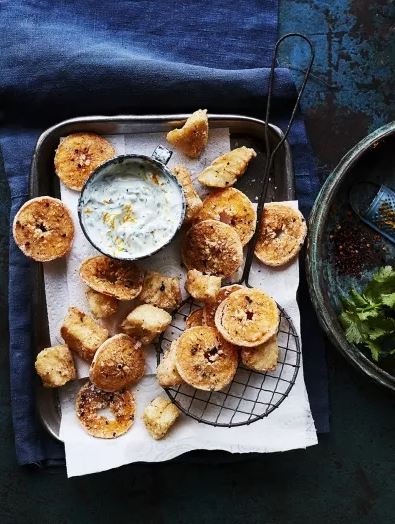
Ingredients 400 gr. white fish fillets 2 limes 1 teaspoon dried chipotle flakes , plus extra to serve 1 teaspoon ground coriander 150 gr. cornflour 150 ml milk 1 litre vegetable oil , for frying 2 clementines Dip 15 gr. fresh coriander 75 gr. plain yoghurt 1 small clove of garlic ½ a clementine Method Cut the fish into 2.5 cm chunks, season with sea salt and black pepper, squeeze over the juice of 1 lime and set aside for 10'. Pick and finely chop most of the fresh coriander leaves for the dip, reserving some for a garnish, and stir through the yoghurt in a small bowl. Peel and crush the garlic, and add to the yoghurt along with the zest of the clementine half. Season to taste and set aside. Crush the chipotle flakes using a pestle and mortar. Transfer to a large, shallow dish with the ground coriander, cornflour and a pinch of salt, then mix well. Pour the milk into a separate bowl. Pour the oil into a large, thick-bottomed saucepan to a depth of around 6cm, it should be no more than two-thirds full. Heat it to 170 ºC, if you don’t have a thermometer, dip the end of a wooden spoon in the oil, if it starts bubbling rapidly around the spoon, it’s ready. Slice the clementines as thinly as you can, about 1 mm. This can be fiddly, so don’t worry about getting perfect rounds. Pat the fish and clementine slices with kitchen paper to soak up any excess juice. Coat them in the cornflour, then dip briefly in the milk before coating again in flour, shaking off the excess. Deep fry the fish and clementine in batches for 2 - 3', or until golden. Drain on kitchen paper and scatter with salt, chipotle and the reserved coriander. Serve immediately with the dip and the remaining lime cut into wedges. Source: https://www.jamieoliver.com/
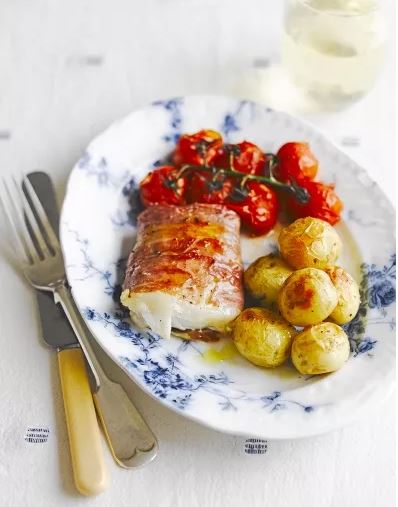
Ingredients 200 gr. baby new potatoes 240 gr. skinless pollock fillets 4 slices of higher-welfare Parma ham 125 gr. ripe cherry tomatoes , on the vine olive oil Method Preheat the oven to 190 ºC. Parboil the potatoes for 5' in salted boiling water, drain and steam dry. Season the fish with sea salt and black pepper, then wrap in ham. Place in a baking dish with the tomatoes and potatoes. Season again and drizzle with oil. Bake in the oven for 12 - 18', depending on the thickness of the fillets. Check the fish with a skewer and cook for another minute or so if it’s not done. Source: https://www.jamieoliver.com/

Ingredients 1½ teaspoons cumin seeds 2½ teaspoons caraway seeds 1 large baking potato, about 500 gr. 100 gr. red quinoa olive oil 1 onion 1 tablespoon Urfa chilli flakes, or ⅔ teaspoon regular chilli flakes 600 gr. smoked mackerel fillets , skin off, pin-boned 1 bunch of fresh parsley ½ a bunch of fresh tarragon 1 large free-range egg 2½ lemons 120 gr. soured cream, optional Method Lightly toast the cumin and caraway seeds, crush and set aside. Preheat the oven to 220 ºC. Place the potato on a small baking tray and bake for 45 - 60', or until soft in the middle. Slice in half, scoop the flesh into a bowl, you should have roughly 350 grams, the skin can be discarded or eaten. Roughly mash the flesh and set aside to cool. Turn the oven down to 190 ºC. Bring a small pan filled with plenty of water to the boil over a high heat. Add the quinoa and cook for 14 to 15 minutes, or until it’s cooked but still retains a bite. Drain and stir through the potato. Add 3 tablespoons of oil to a medium frying pan and place over a medium–high heat. Peel and finely chop the onion. Once the pan is hot, add the onion and a pinch of sea salt and fry for 8', or until soft and caramelised, stirring frequently. Stir in the cumin, caraway and chilli flakes for 1', then add the onion and spices to the potato and quinoa. Flake the mackerel into 1 - 2 cm pieces, pick and roughly chop the herbs and beat the egg; Add it all to the mixture along with ¾ of a teaspoon of salt, the zest of 1½ lemons and plenty of freshly ground black pepper. Mix to combine. Shape the mixture into 12 patties 6 - 7 cm wide and 2 - 3 cm thick, then set aside. Add 2 tablespoons of oil to a large frying pan and place over a medium–high heat. Once hot, add half the patties and fry for 3 - 4', or until golden-brown on both sides, carefully turning halfway through. Remove from the pan and place on a lined baking tray. Add another tablespoon of oil to the pan and continue with the remaining patties in the same way. Finish them off in the oven for about 8', or until cooked through. Cut the remaining lemon into wedges and serve with the hot patties along with soured cream for dipping, if you like. Sources: https://www.jamieoliver.com/

Ingredients 50 gr. whole almonds 1 small onion 2 cloves of garlic 4 anchovy fillets in oil olive oil 300 gr. dried fettuccine , or linguine 4 baby courgettes , with flowers 300 gr. yellowfin tuna 400 gr. quality cherry tomatoes 1 lemon 30 gr. pecorino cheese extra virgin olive oil Method Lightly toast the almonds in a large frying pan on a medium heat, then tip into a pestle and mortar, leaving the pan on the heat. Peel the onion and garlic, finely chop with the anchovies and add to the pan with 2 tablespoons of olive oil. Fry for 4', stirring regularly. Meanwhile, cook the pasta in a pan of boiling salted water according to the packet instructions. Slice the courgettes ½cm thick, reserving the flowers, chop the tuna into rough 1cm dice, then stir both into the frying pan. Scrunch in the tomatoes through your clean hands, squeeze over the lemon juice and leave to tick away, stirring regularly. Finely grate the pecorino. Pound the almonds until fine. Once cooked, use tongs to drag the pasta straight into the frying pan, letting some starchy cooking water go with it. Toss together, then turn the heat off, tear in the courgette flowers and toss in the pecorino and most of the almonds. Check the seasoning, loosen with an extra splash of cooking water, if needed, and serve, sprinkled with the remaining almonds, finished with a drizzle of extra virgin olive oil. Source: https://www.jamieoliver.com/

olive oil 2000 gr. fillets of salmon , skin on, scaled, pin-boned, from sustainable sources 100 gr. blanched almonds 2 cloves of garlic 2 lemons 100 gr. stale ciabatta 2 fresh baby Italian artichokes 280 gr. jar of artichoke hearts in oil 30 gr. fresh mint 12 rashers of higher-welfare smoked streaky bacon 30 gr. fresh thyme Method Preheat the oven to 220 ºC. Line a large baking tray with greaseproof paper and rub with a drizzle of olive oil. Lay 8 pieces of butcher’s string at 5 cm intervals widthways across the baking tray, then place one salmon fillet on top, skin-side down. Toast the almonds in a dry frying pan until golden, tossing regularly, then cool for 1' and tip into a food processor. Peel, roughly chop and add the garlic, finely grate in the lemon zest, then tear in the ciabatta. Season with black pepper, then pulse until finely chopped. Carefully layer over the salmon. Halve 1 lemon. Trim the artichoke stalks 2cm from the base. Peel away the tough outer leaves until you reach the paler ones that are tender enough to eat, then trim the heads to 3cm, rubbing with the cut lemon as you go to prevent discolouration. Halve the artichokes, carefully scoop out and discard the hairy chokes, then finely slice the rest. Drain and roughly slice the jarred artichoke hearts, reserving the oil. Drizzle 1 tablespoon of artichoke oil into a large frying pan and place over a high heat, add the jarred and fresh artichokes and fry for 2', or until warm. Pick and roughly chop the mint leaves, scatter into the pan, then remove from the heat. Spoon the artichoke mix evenly over the salmon, drizzle with 1 tablespoon of the artichoke oil, then lay the other salmon fillet on top, skin-side up. Arrange the bacon over the top in a criss-cross pattern, then place the thyme sprigs on top. Tie the string up and around both fillets to secure the filling. Drizzle over a little artichoke oil and sprinkle any excess breadcrumbs back over the top. Place in the middle of the oven and immediately reduce the temperature to 180 ºC. Roast for 35 - 40', or until the bacon and salmon skin is golden and crisp. Rest for 10' before serving with the remaining lemon cut into wedges for squeezing over. Delicious served with buttered new potatoes and a crisp green salad. Source: https://www.jamieoliver.com/
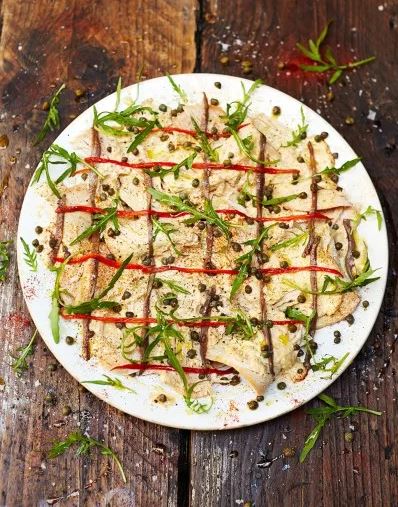
Ingredients 4 fresh red chillies 4 anchovies 2 tablespoons small capers 1 tablespoon red wine vinegar 4 tablespoons extra virgin olive oil 2 tablespoons quality tinned tuna, in oil 2 heaped teaspoons Hellmann’s Real Mayonnaise cayenne pepper 1 lemon sea salt freshly ground black pepper 800 gr. free-range cooked turkey breast 60 gr. rocket Method Prick the chillies with a knife, then hold them over a direct flame on the hob, or place under the grill for around 5', or until blackened and blistered all over, turning occasionally. Transfer to a bowl, cover with clingfilm and leave to cool for around 10'. Halve the anchovies lengthways, then add to a bowl along with the capers, red wine vinegar and extra virgin olive oil. Scrape off and discard the blackened skin from the cooled chillies. Halve, deseed and finely slice them lengthways, then add to the bowl and mix well. Mash the tuna in a pestle and mortar to a smooth, creamy paste. Stir in the mayo, a pinch of cayenne, a squeeze of lemon juice and roughly 1 tablespoon of the dressing from the anchovies and chillies. Taste and season with salt and pepper, if you think it needs it. Arrange the turkey slices on a large platter, then drizzle over the tuna-spiked mayo. Lay over the anchovy fillets in neat vertical lines, then place the chillies horizontally on top so you’ve created a pattern, a bit like a checkerboard! Sprinkle over the capers and the rocket and drizzle over the remaining dressing. Finish with a sprinkling of cayenne and a good grating of lemon zest, then tuck in. Source: https://www.jamieoliver.com/

Ingredients 240 gr. salmon fillets , skin on, scaled, pin-boned 300 gr. green beans 2 large free-range eggs 8 black olives 2 heaped tablespoons Greek yoghurt Method Place the salmon skin side down in a colander over a pan of boiling salted water, covered, to steam for 8'. Line up the beans, trim off just the stalk end, then boil in the water under the salmon for 6', or until just cooked but not squeaky. Gently lower in the eggs to cook for exactly 5½', alongside. Squash the olives and remove the stones, then finely chop the flesh. Mix half of the olives through the yoghurt with a splash of red wine vinegar, taste and season to perfection with sea salt and black pepper. Remove the salmon to a board, then drain the eggs and beans in the colander. Toss the beans in the dressing and divide between your plates. Refresh the eggs under cold water until cool enough to handle, then peel and cut into quarters. Flake over the salmon, discarding the skin, arrange the eggs on top and dot over the remaining chopped olives. Finish with 1 teaspoon of extra virgin olive oil and a good pinch of pepper, from a height. Source: https://www.jamieoliver.com/

Ingredients 320 gr. dried penne 1 onion 1 large courgette 2 sprigs of fresh rosemary 130 gr. smoked boneless mackerel fillets , from sustainable sources olive oil 2 large free-range eggs 100 ml semi-skimmed milk 40 gr. Parmesan cheese 1 lemon , optional Method Cook the penne in a pan of boiling salted water according to packet instructions. Meanwhile, peel and finely slice the onion, then cut the courgette into quarters lengthways and cut out the fluffy core. Slice the courgette at an angle, roughly 1 cm thick, you want the pieces to be about the same size and shape as the penne. Pick and chop the rosemary leaves, then slice the mackerel 1 cm thick, removing the skin, if you like. Put the onions and courgettes into a large frying pan on a medium heat with a lug of oil and a pinch of sea salt and black pepper, stirring occasionally. After 5', add the rosemary and mackerel and cook for a further 5', or until nice and golden, tossing occasionally. Meanwhile, whisk the eggs and milk together, then finely grate in the Parmesan. Reserving a cupful of cooking water, drain the pasta and toss it into the mackerel pan. Take the pan off the heat for a few seconds and stir in a good splash of the reserved water to cool it down. This is really important, because if you add your eggs when the pan’s still screaming hot, the heat will simply scramble them. Quickly pour in the egg mixture and shake and stir together until thickened, silky and evenly coated, then plate up and serve with an extra grating of Parmesan, a good pinch of pepper and a squeeze of lemon juice, if you like. Source: https://www.jamieoliver.com/

Ingredients 50 gr. fresh or frozen peas 600 gr. potatoes 15 gr. of fresh chives 360 gr. of salmon 1 lemon 1 tablespoon plain flour , plus extra for dusting 1 large free-range egg olive oil Method Half-fill a large saucepan with cold water and add a tiny pinch of salt. Place on a high heat and bring to the boil. If using fresh peas, pod them into a bowl, then leave to one side. Use a Y-shaped peeler to peel the potatoes, then chop into 1 cm chunks on a chopping board. Once the water is boiling, carefully add the potatoes, bring back to the boil, then turn the heat down to medium and simmer gently for around 10', or until cooked through, adding the peas for the last 2'. Finely chop the chives and add them to a mixing bowl. Drain the salmon in a sieve over the sink . Add the salmon to the bowl, using a fork to flake it into small chunks. Once cooked, drain the potatoes and peas in a colander over the sink then leave them to cool completely. Use a microplane to finely grate the lemon zest, then add it to the bowl along with the flour. Crack in the egg and season with a tiny pinch of pepper. Once cool, tip the potatoes and peas back into the pan and use a potato masher to mash them really well. Add the mash to the bowl, then mix together until really well combined. Sprinkle a little flour over a clean work surface and onto a large plate. Divide the mixture into 8 and use your hands to pat and shape each ball into a fishcake, roughly 2 cm thick. Place them onto the floured plate, dusting your hands and the top of each fish cake lightly with flour as you go. Place a large frying pan on a medium heat and add 1 tablespoon of olive oil. Carefully place the fishcakes into the pan and cook for 3 - 4' on each side, or until crisp and golden, turning carefully with a fish slice. Cut the zested lemon into wedges. Serve the fishcakes with some seasonal green veg or a fresh green salad and lemon wedges for squeezing over. Source: https://www.jamieoliver.com/