


olive oil 2000 gr. fillets of salmon , skin on, scaled, pin-boned, from sustainable sources 100 gr. blanched almonds 2 cloves of garlic 2 lemons 100 gr. stale ciabatta 2 fresh baby Italian artichokes 280 gr. jar of artichoke hearts in oil 30 gr. fresh mint 12 rashers of higher-welfare smoked streaky bacon 30 gr. fresh thyme Method Preheat the oven to 220 ºC. Line a large baking tray with greaseproof paper and rub with a drizzle of olive oil. Lay 8 pieces of butcher’s string at 5 cm intervals widthways across the baking tray, then place one salmon fillet on top, skin-side down. Toast the almonds in a dry frying pan until golden, tossing regularly, then cool for 1' and tip into a food processor. Peel, roughly chop and add the garlic, finely grate in the lemon zest, then tear in the ciabatta. Season with black pepper, then pulse until finely chopped. Carefully layer over the salmon. Halve 1 lemon. Trim the artichoke stalks 2cm from the base. Peel away the tough outer leaves until you reach the paler ones that are tender enough to eat, then trim the heads to 3cm, rubbing with the cut lemon as you go to prevent discolouration. Halve the artichokes, carefully scoop out and discard the hairy chokes, then finely slice the rest. Drain and roughly slice the jarred artichoke hearts, reserving the oil. Drizzle 1 tablespoon of artichoke oil into a large frying pan and place over a high heat, add the jarred and fresh artichokes and fry for 2', or until warm. Pick and roughly chop the mint leaves, scatter into the pan, then remove from the heat. Spoon the artichoke mix evenly over the salmon, drizzle with 1 tablespoon of the artichoke oil, then lay the other salmon fillet on top, skin-side up. Arrange the bacon over the top in a criss-cross pattern, then place the thyme sprigs on top. Tie the string up and around both fillets to secure the filling. Drizzle over a little artichoke oil and sprinkle any excess breadcrumbs back over the top. Place in the middle of the oven and immediately reduce the temperature to 180 ºC. Roast for 35 - 40', or until the bacon and salmon skin is golden and crisp. Rest for 10' before serving with the remaining lemon cut into wedges for squeezing over. Delicious served with buttered new potatoes and a crisp green salad. Source: https://www.jamieoliver.com/

Ingredients 150 gr. stale rustic bread 50 ml Prosecco olive oil 1 lemon 4 cloves of garlic 1 dried red chilli 30 gr. 1 bunch of fresh mint 4 anchovy fillets in oil , from sustainable sources 1 tablespoon baby capers in brine 2500 gr. 1 large butterflied leg of higher-welfare lamb , boned but shank bone left in Method Preheat the oven to 200 ºC. Tear the bread into rough 2 cm chunks and place in a food processor, then pour over the Prosecco, drizzle with 1 tablespoon of oil, finely grate in the lemon zest and squeeze in the juice. Season generously with sea salt and black pepper, then leave to soak for 10'. Peel the garlic and roughly chop with the chilli, pick the mint leaves, and add to the processor with the anchovies and capers. Pulse into crumbs, then taste and season to perfection, if needed. Lay the lamb leg on a board, skin side down. Massage all over with a pinch of salt and pepper, then spoon over the stuffing in an even layer. Roll up the leg meat to seal the filling inside, then tie at regular intervals with six lengths of string to make sure the stuffing is secure. Place straight on to the bars of the oven, with a tray underneath to catch the juices. Roast for 70', or until the lamb is golden, yet still blushing and pink in the middle, cook for a further 10 - 15' if you prefer your lamb well done. Rest for 5', while you simmer the tray of drippings on a medium heat with a little water, stirring to pick up any nice sticky bits. Slice the lamb and spoon over the tray juices. Beautiful served with roast potatoes and seasonal veg. Source: https://www.jamieoliver.com/

Ingredients 1 x basic bread recipe 6 bananas 8 tablespoons runny honey 1 handful almonds , cracked or chopped Method First of all, peel your bananas then purée them in a liquidizer or food processor. The mix will be surprisingly wet. Pour it into a measuring jug, then top up with water until you have 625 ml or just over 1 pint. At Stage 1 of the basic bread recipe, use this banana liquid instead of the water to flavour your bread and make it nice and chewy. Also add half the honey with the nuts to the dough at this point. Then continue through the basic recipe as normal. At Stage 5 divide the dough into 10 balls. Then pack these next to each other in a flour-dusted baking tin where they will prove together. Before putting in the oven drizzle generously with the rest of the honey so that the top of the bread will caramelize, going nice and golden. Bake in your preheated oven at 190 ºC for 20'. Allow to cool for a little while, but it's best served still warm with butter and a glass of milk for breakfast while you read the paper. Also fantastic used in bread and butter pudding or simply heated up with a bit of ice cream. Source: https://www.jamieoliver.com/
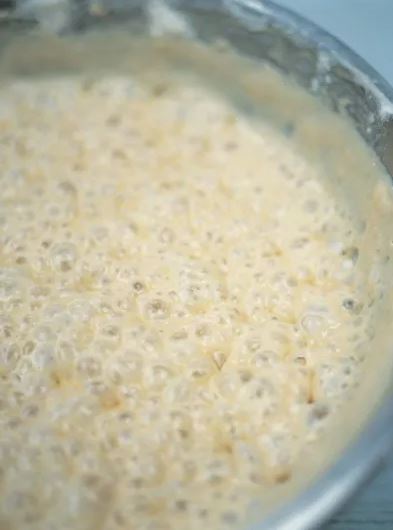
Ingredients 1000 gr. strong bread flour 625 ml tepid water 21 gr. dried yeast or 30 gr. fresh yeast 2 tablespoons sugar 1 level tablespoon fine sea salt flour , for dusting Method Stage 1: Making a well Pile the flour on to a clean surface and make a large well in the centre. Pour half your water into the well, then add your yeast, sugar and salt and stir with a fork. Stage 2: Getting it together Slowly, but confidently, bring in the flour from the inside of the well. Continue to bring the flour in to the centre until you get a stodgy, porridgey consistency, then add the remaining water. Continue to mix until it's stodgy again, then you can be more aggressive, bringing in all the flour, making the mix less sticky. Flour your hands and pat and push the dough together with all the remaining flour. Stage 3: Kneading! This is where you get stuck in. With a bit of elbow grease, simply push, fold, slap and roll the dough around, over and over, for 4 - 5' until you have a silky and elastic dough. Stage 4: First prove Flour the top of your dough. Put it in a bowl, cover with cling film, and allow it to prove for about 30' until doubled in size, ideally in a warm, moist, draught-free place. This will improve the flavour and texture of your dough and it's always exciting to know that the old yeast has kicked into action. Stage 5: Second prove, flavouring and shaping Once the dough has doubled in size, knock the air out for 30" by bashing it and squashing it. You can now shape it or flavour it as required, and leave it to prove for a second time for 30 - 60' until it has doubled in size once more. This is the most important part, as the second prove will give it the air that finally ends up being cooked into your bread, giving you the really light, soft texture that we all love in fresh bread. Stage 6: Cooking your bread Preheat the oven to 180 °C. Very gently place your bread dough on to a flour-dusted baking tray and into the preheated oven. Don't slam the door or you'll lose the air that you need. Bake for 25 - 30' or until cooked and golden brown. You can tell if it's cooked by tapping its bottom, if it sounds hollow it's done, if it doesn't then pop it back in for a little longer. Once cooked, place on a rack and allow it to cool for at least 30'.

Ingredients 3 large free-range eggs 115 gr. plain flour 1 heaped teaspoon baking powder 140 ml milk 1 pinch salt 2 knobs butter 3 tablespoons caster sugar 4 bananas crème fraîche , to serve Method Separate the eggs, putting the whites into one bowl and the yolks into another. Combine the plain flour, baking powder and milk with the egg yolks and mix until it forms a smooth, thick batter. Whisk the whites with the salt until they form stiff peaks. Fold the whites into the batter, it is now ready to use. Heat a non-stick frying pan over a moderate heat. Pour some of your batter into the pan and fry for a couple of minutes until it starts to look golden and firm. Loosen with a spatula and turn or flip the pancake over. Continue frying until golden. Melt the butter and sugar in a separate pan over a low heat until they form a caramel sauce, about 3'. Peel and cut the bananas lengthways, add them to the pan and cook gently until they are golden, turning after a few minutes. You might need to alter the cooking time slightly, depending on how ripe your bananas are. Serve them on the pancakes topped with a good spoonful of crème fraîche. Source: https://www.jamieoliver.com/
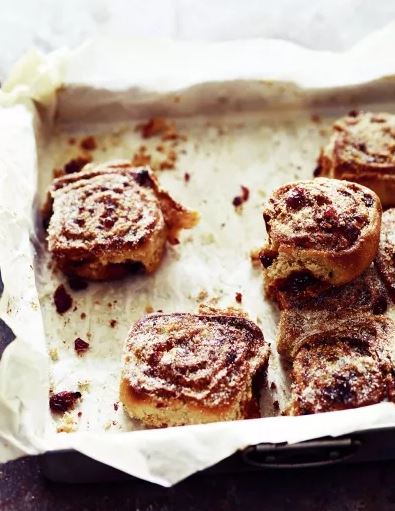
Ingredients 14 gr. sachets of fast-action yeast 500 ml lukewarm milk 3 large free-range eggs 650 gr. plain or light spelt flour , plus extra for dusting 200 gr. wholemeal flour 1 pinch of ground cinnamon 150 gr. unsalted butter, at room temperature 150 gr. caster sugar unrefined caster sugar 3 tablespoons apricot jam or runny honey Filling 225 gr. dried cranberries 3 oranges 150 gr. unsalted butter, at room temperature 150 gr. soft brown sugar 6 teaspoons ground cinnamon Method In a large bowl, dissolve the yeast in the warm milk, stirring with a whisk, then beat and add 1 egg and stir again. Sift together the flours, cinnamon and a small pinch of sea salt and add the butter, using your hands to crumble it. Add everything to the milk mixture with the sugar. Beat and add another egg, stirring to form a dough. Keep stirring until the dough comes cleanly from the edge of the bowl and knead on a floured surface for about 5', or until smooth. Return it to the bowl, cover it with an oiled piece of clingfilm and leave to rise at room temperature for 30'. Chop the cranberries and finely grate the orange zest. Combine with the remaining filling ingredients in a bowl and leave to one side. Once the dough has risen, divide it in half, place each one on a lightly floured surface and roll it out to a 30cm x 40cm rectangle. Spread the filling over the top of each, then roll each piece of dough into a wide cylinder. Cut them into 2,5 cm slices. Line two baking trays with baking paper and lay the cinnamon rolls on top, pressing each one so they spread out slightly. Cover with oiled clingfilm and leave to rise for 20'. Preheat the oven to 220 ºC. Beat the remaining egg and brush it over the cinnamon rolls, then sprinkle with a tiny pinch of sugar. Bake in the oven for 15 - 18', until golden brown, then leave to cool on a wire rack. Brush with warmed apricot jam or honey to glaze. Serve warm or cold. Source: https://www.jamieoliver.com/

Ingredients 400 ml milk 1 tablespoon dried yeast 1 teaspoon caster sugar 300 gr. strong white flour ½ teaspoon bicarbonate of soda vegetable oil , for greasing Homemade butter 350 ml double cream Method Gently warm the milk. In a bowl, dissolve the yeast and sugar in the warm milk and 100 ml of tepid water. Leave in a warm place for 15', or until frothy. Sift the flour, bicarbonate of soda and 1 teaspoon of fine sea salt into a large bowl. Make a well in the centre and pour in the yeast mixture. Whisk from the centre outwards until the consistency of double cream, this will take a few minutes. Add a splash more water, if needed. Cover with a damp tea towel and set aside for 45' or until little bubbles form on the surface. For the butter, pour the cream into a freestanding mixer. Whisk on high for 5 - 10', or until the cream splits into solids and liquid. Drain through a sieve, discard the liquid, then rinse the solids thoroughly with cold water. Place in muslin and squeeze out any excess liquid. Mix ½ a teaspoon of sea salt through and wrap in greaseproof paper. Grease four 10cm egg rings with vegetable oil. Wipe a little oil around a large frying pan or iron skillet and place over a medium-high heat. Arrange the rings in the frying pan and, once hot, spoon 4 tablespoons of the batter into each ring. Cook for 5', or until little bubbles appear on the surface. Once the bubbles have burst, leaving little holes, use tongs to carefully lift off the rings and flip over the crumpets, then cook for 1' on the other side. Re-grease and reheat the rings and pan before cooking the next batch. Serve the crumpets warm, with a slather of butter. If making them in advance, just toast lightly on both sides when you come to serve them. Source: https://www.jamieoliver.com/

Ingredients 100 gr. Medjool dates 100 gr. wholemeal self-raising flour 100g self-raising flour , plus extra for dusting 30g ground almonds 1 large free-range egg olive oil 320g blueberries 1 tablespoon runny honey 4 tablespoons Greek yoghurt ground cinnamon , optional Method Tear the stones out of the dates and place the flesh in a food processor with the flours, ground almonds, egg, a tiny pinch of sea salt and 70 ml of water. Blitz until combined and forming a ball of dough, then roughly knead on a clean flour-dusted surface for just 2'. Roll out the dough 1.5cm thick, then use an 8cm cutter to cut out two rounds. Use a 3cm cutter to cut a hole in the centre of each one, then use those centre bits and the remaining cut-offs of dough to roll it out again, repeating the process until you have four doughnuts in total. Simmer the doughnuts in a large pan of gently boiling water for 5', very carefully turning them over halfway through. Place a large frying pan on a medium heat with 1 tablespoon of oil. Drain the doughnuts well, then carefully transfer them to the frying pan to get golden for 10 minutes, turning regularly to build up a nice crust. Once looking good, add the blueberries to the pan, then drizzle over the honey. Jiggle and shake the pan over the heat for a couple of minutes, using a spoon to keep turning the doughnuts in all that lovely jammy blueberry juice. When it looks nice and shiny and the doughnuts are purple, ripple the yoghurt through the pan and divide between your plates. Nice with a sprinkling of cinnamon, to finish. Source: https://www.jamieoliver.com/
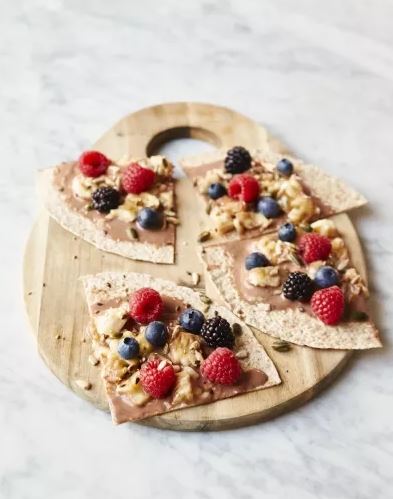
Ingredients 1 satsuma 1 wholemeal tortilla wrap 1 teaspoon quality cocoa powder 2 tablespoons natural yoghurt 1 ripe banana 1 handful fresh berries , such as raspberries, bluberries 1 teaspoon mixed toasted seeds Method On a chopping board, slice the satsuma in half across the middle, then remove to a plate and pat the board dry with kitchen paper, if needed. Spoon the cocoa powder into a jam jar, then squeeze in half the satsuma juice. Put the lid securely on the jar and shake well. Add the yoghurt, pop the lid back on, and give it another shake. Lay the wrap flat in the middle of the chopping board, then spread the cocoa yoghurt evenly over the wrap. Peel and place the banana in the middle of the wrap, then gently mash with a fork, spreading it around as evenly as possible. Sprinkle the berries and seeds over the mashed banana. Cut into quarters, then tuck in, folding or wrapping up each quarter as you go. Source: https://www.jamieoliver.com/

Ingredients 500 gr. plain flour, plus extra for dusting 50 gr. caster sugar 14 gr. sachets of dried yeast 300 ml whole milk 250 gr. unsalted butter, cold Filling 1 tablespoon ground cardamom 1 tablespoon ground cinnamon 100 gr. light brown muscovado sugar 90 gr. caster sugar , plus 3 tablespoons 8 clementines 50 gr. unsalted butter Method Mix the flour, sugar and 2 teaspoons of sea salt in a large bowl, make a well in the centre and add the yeast. Warm the milk and pour over the yeast. Let it sit for a few minutes, then mix quickly with a knife to form a dough. Knead for 3 - 4', or until smooth, then shape into a rough rectangle. Wrap in clingfilm and chill for 2 hours. Just before the 2 hours are up, place the butter between 2 large sheets of greaseproof paper and use a rolling pin to beat and roll the butter into a flat rectangle, about 20 x 30cm. Chill in the fridge for 15'. On a lightly floured surface, roll the dough into a rectangle about 20 x 45cm. Place the chilled butter at one end, so it covers two thirds of the dough, fold the other third over the butter, then fold over again. Turn the parcel 90 degrees and roll back out to 20 x 45cm. Fold as before, then wrap in clingfilm and pop in the fridge for 45'. Repeat this process twice more, chilling in between. Combine the cardamom, cinnamon and sugars, then finely grate in the clementine zest. Melt the butter and grease a 12-hole deep muffin tin. Roll the dough to 30 x 50cm, brush with the remaining melted butter and evenly sprinkle over the spiced sugar. Roll up tightly lengthways, trim the ends so it’s 45 cm long, then cut the log into 12 pieces. Place the pieces of dough cut-side up in the muffin tin, cover loosely with oiled clingfilm and leave to prove at room temperature for 1 hour. Chill the tin of buns in the fridge for 30', or overnight. Preheat the oven to 190 ºC. Place the muffin tin on a tray in the centre of the oven and bake for 30 - 35', rotating halfway, or until golden. Cover with foil for the final 10' if they are browning too much. Flip onto a wire rack, then scatter over the 3 tablespoons of caster sugar to serve. Source: https://www.jamieoliver.com/